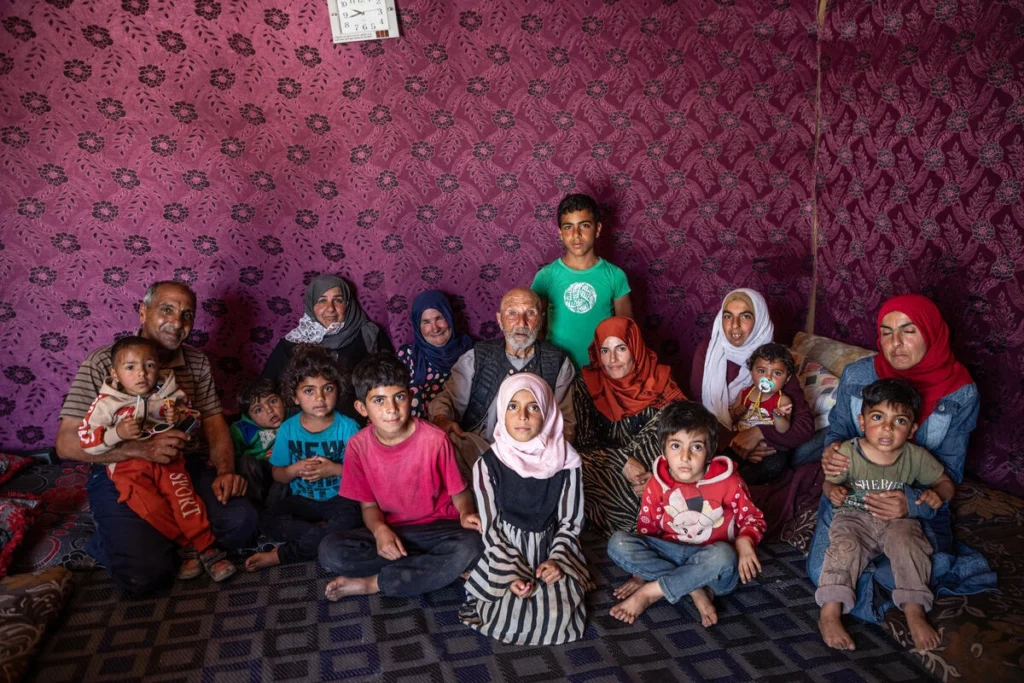
The fall of the Assad regime offered a glimmer of hope for peace and stability in Syria. After fourteen years of conflict, which led to the world’s largest displacement crisis, 2025 became the year in which millions of Syrians began to make a reality of what had long seemed impossible: returning home.
However, this process has not been straightforward due to obstacles such as destroyed or damaged homes, lack of employment, shortages of basic services and uncertainty regarding security in various parts of the country.
In response to this situation, UNHCR has worked to facilitate safe voluntary returns, offering financial assistance, transport, legal support and help with the necessary documentation for reintegration.
In this context, the support of Fuster & Associates has been crucial, directly helping returning families to meet their initial needs and take their first steps towards a dignified and sustainable reconstruction of their lives.
Jassim: returning to his homeland after a lifetime
Jassim, a Syrian great-grandfather aged over 100, embodies the most human aspect of return. After losing three of his sons during the conflict in 2013, he fled with the rest of his family to Lebanon, where he lived for over a decade in extremely harsh conditions.
“
I remember them every day and I cry for them. You raise your children in the hope of seeing them bring life to your home. Now they are no longer here.
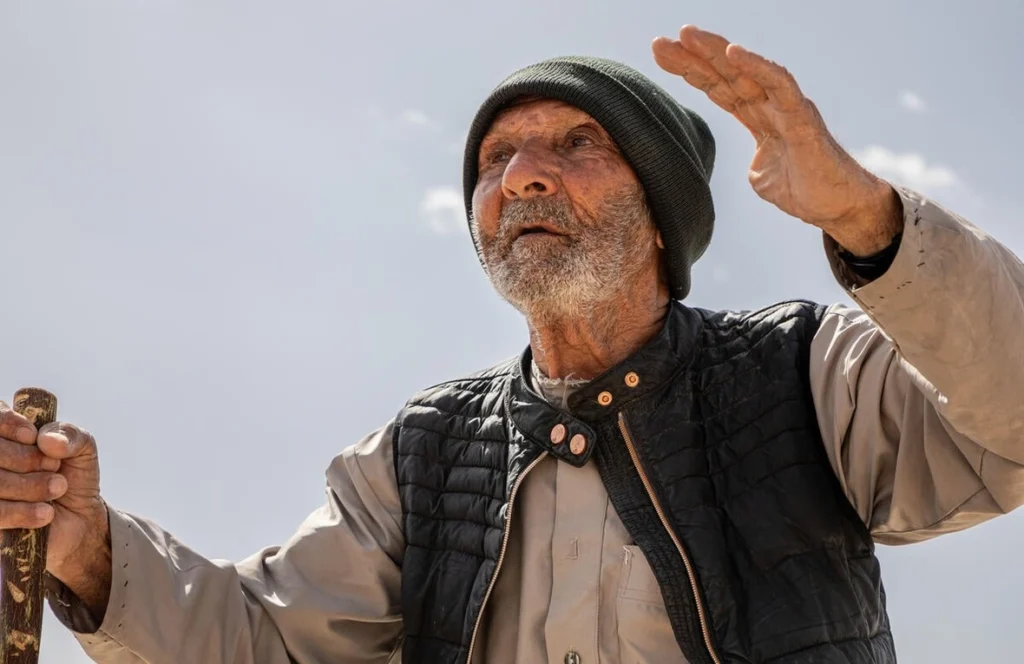
His life in exile was marked by precariousness: cold winters, extreme summers and the constant uncertainty of not knowing whether he would ever be able to return to Syria.
The return finally came at the end of April 2025. But the reality he found was devastating:
“
When we arrived, we found our house destroyed. I felt I was starting all over again from scratch.
During the first few days, the family had to clear away rubble and rebuild a basic shelter on the ruins of their own home.
Hassan: the return as a rebirth
Hassan Mohammad Alhassan, aged 80, spent thirteen years as a refugee in Jordan before he was able to return to Syria. His return symbolises the desire of thousands of elderly people who, despite the uncertainty, have decided to go back home.
Alhassan and his family were part of a group of more than 90 Syrian refugees who set off on the return journey in three buses from Amman to various cities including Damascus, Homs and Daraa. UNHCR, the UN Refugee Agency, organised this transfer as part of a free transport service which, since 20th January, has been facilitating the return of registered Syrian refugees wishing to return to their country.
He describes his return with a mixture of emotion and relief:
“
We lived in Jordan as if it were our own country… Now, on returning, we feel as if we have been reborn. It is as if we are starting a new life.
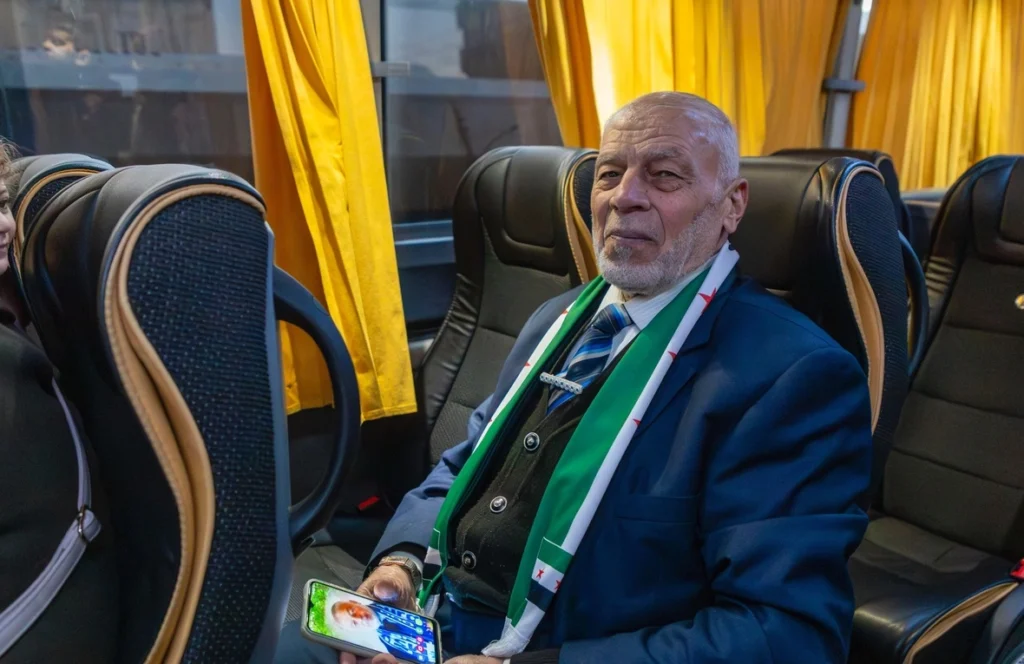
Despite this emotion, the return also brings with it a difficult reality, marked by the need to rebuild their lives from scratch and by uncertainty about the state of their home.
“
My house in Syria is destroyed; it needs repairs, and they will be costly. When I return, I will see what remains of it and determine exactly what needs to be done.
Ibtihal: rebuilding a life amidst the ruins
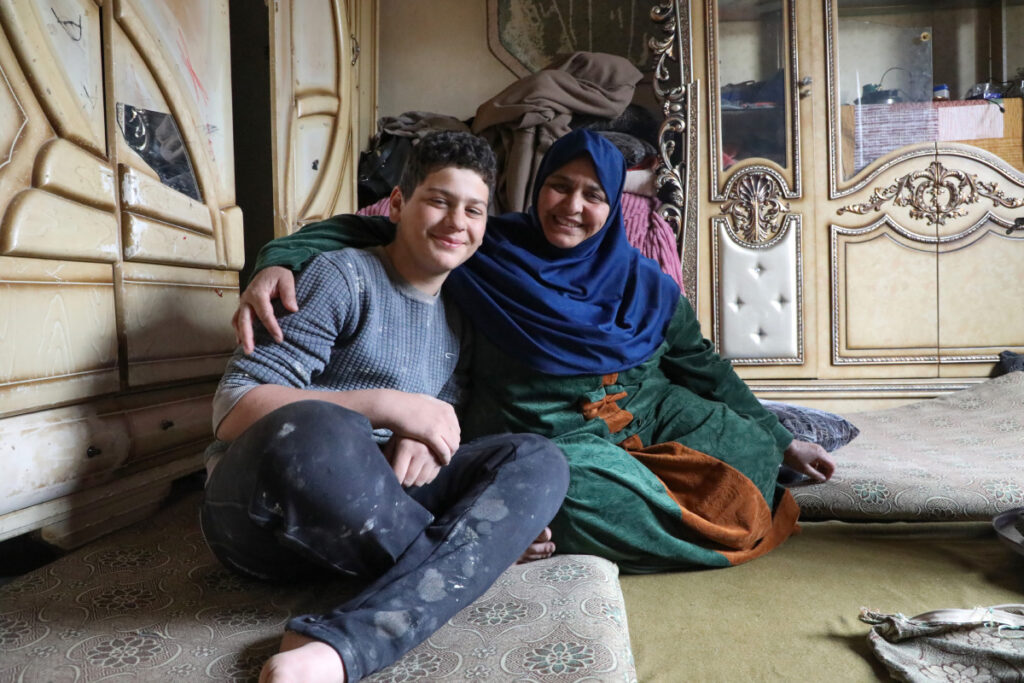
Ibtihal returned to Syria after twelve years in Jordan. Her story clearly illustrates the contrast between the hope of returning and the harsh reality.
Sitting in her partially destroyed home in Sheikh Miskeen, in the governorate of Daraa, she recalls the moment she crossed the border:
“
When I first arrived and stood at the border, I was overcome with emotion and started to cry. I was so happy and excited to be back… I hadn’t been in my country or seen my family for 12 years.
During her exile, she also suffered significant losses: her father passed away whilst she was away and a nephew was killed in a bombing.
But on her return, the reality was harsh. Her home had been severely damaged by the conflict, with no doors or windows, a damaged roof and no basic services.
“
When I saw my house, it was in ruins. Life is truly painful: the basic necessities are lacking. I don’t have the money to fix anything, but my husband wants to work so that we can rebuild little by little.
Even so, she remains hopeful:
“
I have great faith in God that Syria will be as it was before; that it will be rebuilt.
Humanitarian Response & Support for Return
In situations like this, UNHCR’s work has been vital in providing emergency assistance and supporting the rehabilitation of homes, facilitating the return of families in safer conditions.
During 2025, UNHCR’s response in Syria has reached an unprecedented scale:
- 1.3 million Syrians have returned from neighbouring countries
- 2 million internally displaced people have returned to their homes
- More than 259,000 families have received emergency items
- More than 36,000 families have received cash assistance
- More than 4,600 homes have been rehabilitated
However, the needs remain enormous and the capacity to respond depends directly on the funding available.
Our Commitment
Fuster & Associates has contributed to the humanitarian response in Syria in 2025, in collaboration with UNHCR.
This contribution has enabled:
- Basic assistance for 37 returnee families (185 people) through emergency kits
- Rehabilitation of homes for 8 families (40 people)
- Direct support for a total of 225 people in their return process
Fuster & Associates’ contribution has been key to ensuring that these families can meet their immediate needs and begin their reintegration process with greater stability upon returning to a country where, in many cases, they have lost everything.
The stories of Jassim, Hassan and Ibtihal show that returning to Syria is not an end, but the beginning of a complex process of reconstruction. Behind every return lies a life that must be rebuilt from scratch, amidst physical ruins and emotional wounds that are still raw.
At Fuster & Associates, we reaffirm our commitment to supporting returnees, helping to ensure that their return is not only possible, but dignified, safe and sustainable. That is why our collaboration with UNHCR enables us to turn this aid into a real impact on the ground.
Because rebuilding Syria is not just about putting up buildings: it is about giving people back the chance to live again.