2025 was the best year for property sales since the boom. January 2026 saw a 4.2% slowdown. Against this backdrop, international buyers (who in 2025 accounted for nearly 100,000 transactions and are increasingly purchasing without ever setting foot in Spain) are the market’s most valuable asset. And the property lawyer is the partner who ensures that sale goes through successfully.
There is a scenario that plays out in the Mediterranean coast’s property sector more frequently than it might seem: an agent has done an impeccable job, the foreign client is convinced, the property is the right one and the price has been agreed. And then the process grinds to a halt. The buyer has doubts about the contract, doesn’t understand what a bank guarantee is, doesn’t know how the escrow account works, and is unaware of the taxes they’ll face as a non-resident. The agent tries to answer, but these questions aren’t their area of expertise. And the sale, which was all but done, falls through.
There is a solution to this scenario. And it doesn’t come from the agent studying Spanish property law. It involves having a specialist lawyer on hand to handle that part of the process, clear up the buyer’s doubts and allow the sale to proceed smoothly. In a market that is slowing down after a historic 2025, that difference between a deal that goes through and one that falls through is worth more than any argument over price.
The market in 2026: less room for error, greater value for foreign buyers
2025 ended as the best year for property sales since the property boom, with over 700,000 transactions registered. But January 2026 recorded 56,776 property sales, down 7% year-on-year, the largest monthly decline since June 2024. The Valencian Community recorded a 10.8% fall in the same month, above the national average.
This is not a sign of a structural crisis; analysts point to a return to normality following an exceptional cycle, but it does confirm that the market is entering a more selective phase.
In this context, the foreign buyer is not just another segment: it is the segment. The Association of Registrars confirms that in 2025, international buyers carried out nearly 100,000 transactions in Spain, accounting for 13.52% of the total, with 10.8% of those purchases exceeding €500,000 – a record high. On the Mediterranean coast, the figures are even more revealing: in the fourth quarter of 2025, Alicante recorded that 42.91% of its property sales were made by foreigners; Murcia reached 20.74%; and the Valencian Community, 27.17%. This buyer is not going to disappear as the market moderates. But they will become more demanding regarding the process.
“
In a market that is slowing down, legal transparency is the best marketing campaign we can offer. Our commitment is that no foreign investor should feel that Spain is a labyrinth, but rather a safe haven for their assets.
— Pedro Martínez
CEO, Fuster & Associates
The buyer who purchases without setting foot in Spain: a reality the sector cannot ignore
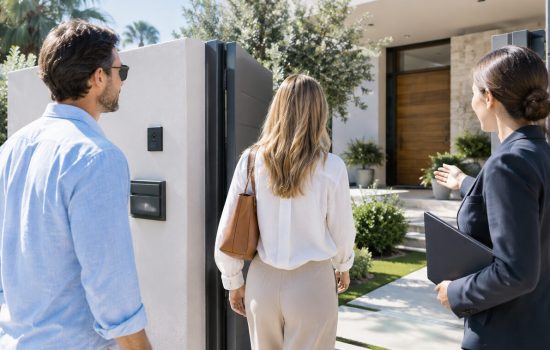
There is a trend that has accelerated in recent years and is radically changing the dynamics of the sales process: more than 25% of transactions involving foreign buyers on the Mediterranean coast are completed online, without the client having visited the property in person. In some segments – such as North American investors, Scandinavian buyers and high-net-worth individuals – that percentage is even higher.
Such a buyer has seen the area on a previous visit, has made the decision remotely and trusts the agent and the solicitor to manage the entire process. They sign powers of attorney from their home country. They transfer funds without being present. They receive the keys without ever having set foot in the solicitor’s office. It is a completely valid way of buying, one that is becoming increasingly common, and which only works when there is a solid legal framework behind it.
An estate agent working with this type of buyer without the backing of a specialist law firm is taking on a responsibility that is not theirs to bear. Because when that remote buyer asks a legal question – about the contract, about the guarantees for their payments, about the taxes they will face as a non-resident – and the agent answers without being a lawyer, any inaccuracy can come back to haunt them. And when that buyer decides to seek a solicitor in their home country (who is unfamiliar with Spanish law, who interprets the contract through an outsider’s eyes, and who may advise against signing for reasons that would be perfectly normal here) the sale falls through for a reason that has nothing to do with the property or the price.
“
The foreign buyer’s fear is not of Spain. It is of the unknown: not knowing how the buying process works, not knowing who they are buying from, not knowing if their money is protected. With an independent specialist property lawyer, those doubts disappear. And when the doubts disappear, the client buys.
— María José Sánchez
Sales Director, Fuster & Associates
What the agent needs to know: three situations where the solicitor closes the sale
In day-to-day market practice, there are three specific situations in which the presence of a specialist solicitor makes the difference between a sale that goes through to completion and one that does not:
- The client has doubts about the guarantees for their down payments. When a foreign buyer pays money before receiving the keys to a new-build property, they are entitled to have those funds protected: deposited in a special bank account linked exclusively to that development, guaranteed by a bank guarantee or surety bond, with an individualised document in their name certifying that protection. Many developers comply with these obligations, but do not always communicate them with the clarity that the foreign buyer requires. The solicitor checks that everything is in order, explains it in the client’s language and turns a doubt that was holding up the transaction into a certainty that moves it forward.
- The developer does not yet have all the documents ready and the client wants to buy now. This is a more common situation than it seems: the developer is solvent, the development is sound, but Spanish bureaucracy moves at its own pace and some paperwork has not yet arrived. The firm seeks alternative solutions until the developer provides the required documentation. The buyer does not lose the property. The developer does not lose the sale. The agent closes the deal. Everyone wins.
- The client wants to find a lawyer from their home country. This is the most dangerous scenario for the agent. A foreign lawyer unfamiliar with Spanish property law will read the contract with a different perspective, interpret as problems things that are standard procedure here, and may recommend not signing for reasons that a local lawyer would resolve in five minutes. The solution is not to dissuade the client from seeking advice: it is to offer them a better one, specialising in the Spanish market, who inspires more confidence than the one they would find on their own and who knows whether the bank guarantee is correct or whether the insurer issuing the surety policy complies with Spanish regulations.
In a selective market, trust is not negotiated: it is certified.
The foreign buyer of 2026 is not just looking for the nicest property or the most competitive price. They are looking for the transaction with the lowest perceived risk. The agent who can tell them that the legal process is reviewed by a specialist firm from day one is not adding a step: they are removing the main obstacle to the decision to buy.
The solicitor is not the developer’s prosecutor: they are the partner who ensures everyone gets paid
There is a misconception, widespread in parts of the sector, regarding the role of the buyer’s solicitor: that they are an obstacle, someone who complicates what was agreed and looks for problems where there are none. Fuster & Associates’ 25 years of experience working exclusively with international buyers on the Mediterranean coast tells a completely different story.
A foreign buyer who arrives with specialist legal advice is, in the vast majority of cases, a buyer who goes through with the purchase. They have passed the test of doubt. Someone they trust has told them that the transaction makes sense, that the legal framework is sound and that their interests are protected. An agent who understands this does not see the buyer’s solicitor as a threat: they see them as the final step before the ‘yes’.
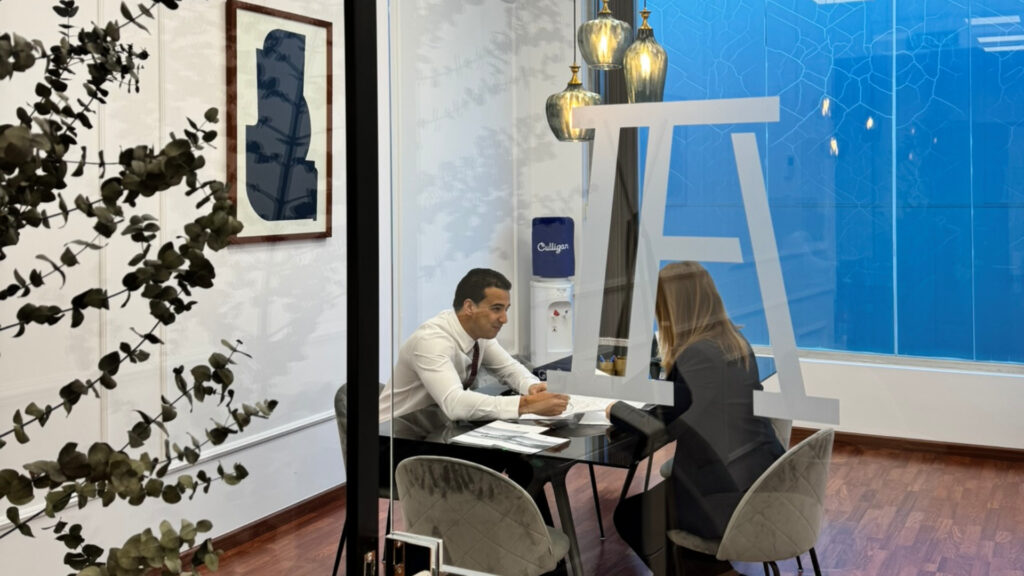
And there is something else. The firm that works alongside the agent and the developer from the outset – verifying the documentation before it goes on the market, reviewing the contract, and securely managing payments – does not merely protect the buyer. It frees the agent from having to answer questions for which they are not trained, reduces the risk of the client seeking external advice incompatible with the transaction, and transforms a process that can be contentious into one that flows smoothly.
“
For the estate agency, collaboration with a specialist firm is not a cost, but an investment borne by the client themselves to safeguard their assets. This allows the agent to focus on what they do best – selling – by delegating the complex paperwork to experts and eliminating the risk of providing incorrect legal advice that could backfire on them.
— María José Sánchez
Sales Director, Fuster & Associates
2026: the year legal advice ceases to be optional
The data is clear overall: 2025 was an exceptional year for the Spanish property market, but January 2026 introduces a note of moderation that the sector cannot ignore. In this context, the foreign buyer, who accounted for nearly 100,000 transactions in 2025 with average spending at record highs, is not going to disappear. But they will be more selective. They will choose transactions where they feel the process is well managed, that the documents are in order, and that someone who knows the local area and regulations is on their side. In a selective market, trust is not negotiated: it is certified.
“
A poorly drafted contract is not an administrative error. It is a time bomb that explodes months later in the form of a claim, a deal falling through, or a reputation being eroded. We property lawyers are not a cost in the transaction: we are the insurance that ensures the investment is successful.
— David Albaladejo Fuster
Founder, Fuster & Associates
The developer or agent who can offer this has a real competitive advantage in 2026. Those who cannot offer it face a problem that, at best, will cost them deals.

Fuster & Associates: 25 years leading the way in international legal security.
Excellence in Conveyancing, Immigration and Taxation for the global investor.
With a track record spanning a quarter of a century and a client base comprising 99% foreign clients, we are the benchmark in the protection of property investments in Spain. We do not merely handle paperwork: we assess the risk to ensure that every transaction is legally sound from day one.
- Strategic Presence: We operate from our offices in La Zenia, Teulada, Finestrat, Los Alcázares, Murcia and San Juan de los Terreros.
- New Opening April 2026: We are expanding our reach with a new office in Valencia to meet the needs of the region’s most demanding market.
- Multicultural Expertise: An expert team fluent in over 40 languages, removing any barriers to tax and legal management for non-residents.
- 360° Vision: We cover all three angles of the transaction (buyer, agency and developer), enabling us to anticipate potential issues and ensure a successful deal.
Contact Fuster & Associates today and let our expert team guide you through every step of your property, immigration or tax process. We are here to protect your investment from day one and ensure a smooth, secure and successful transaction.